Terrifying Landing! Hunan Airlines Flight Suddenly Filled with Smoke
吃瓜小帅
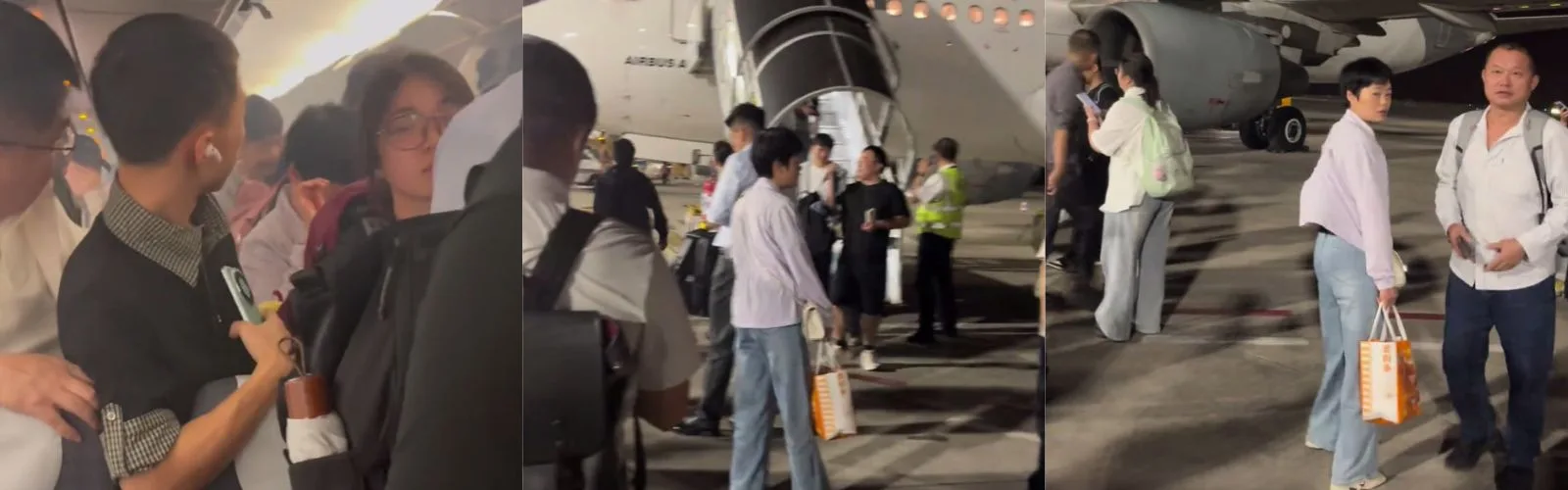
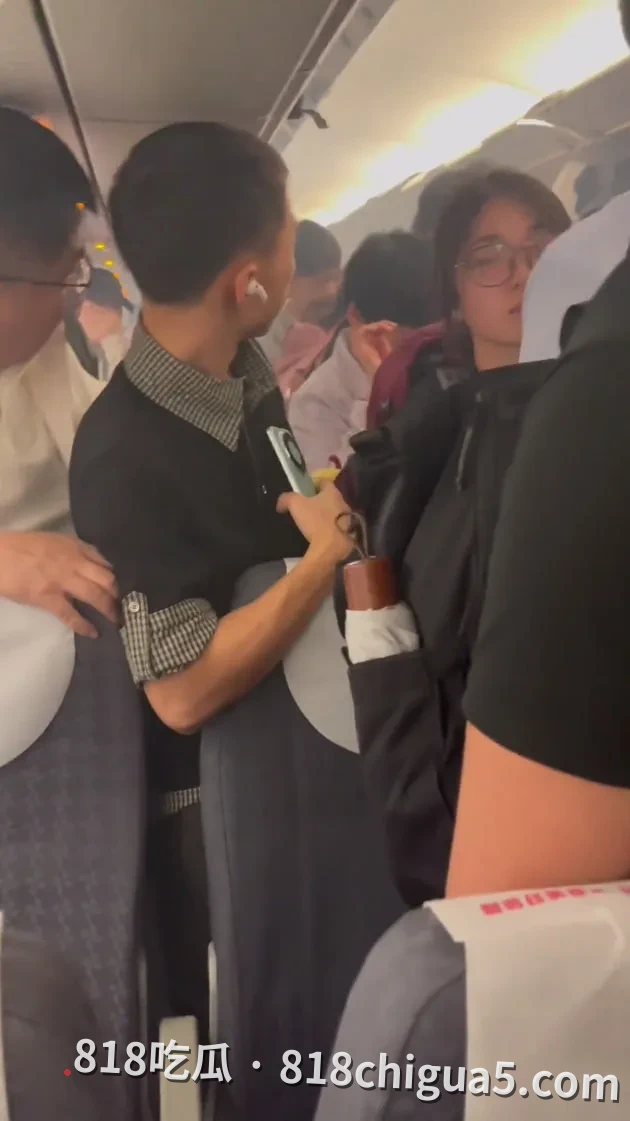
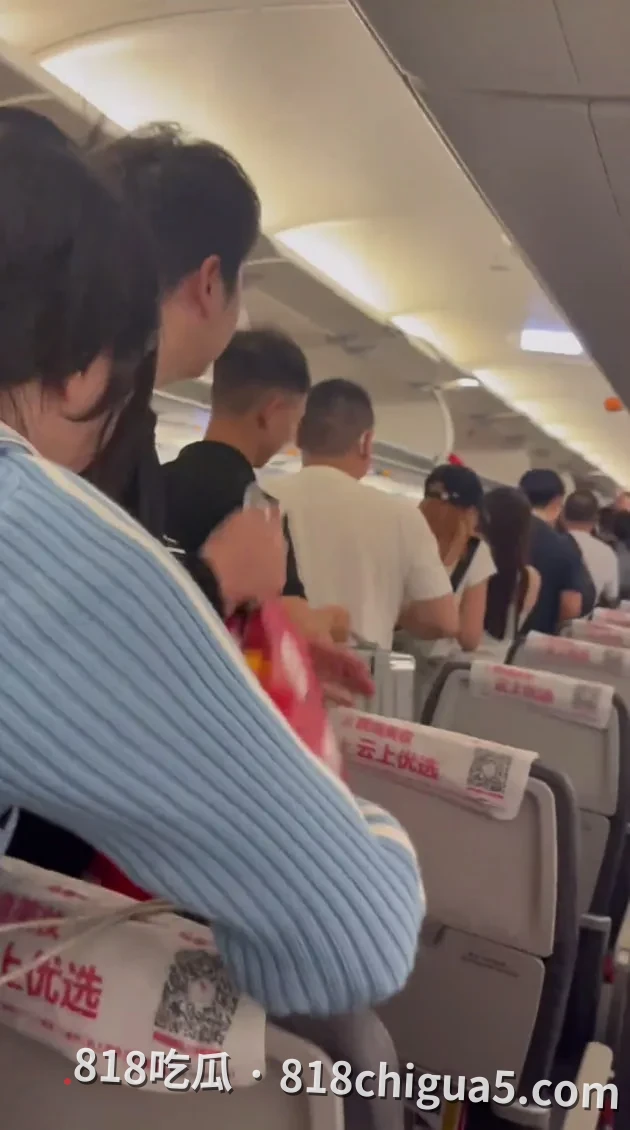
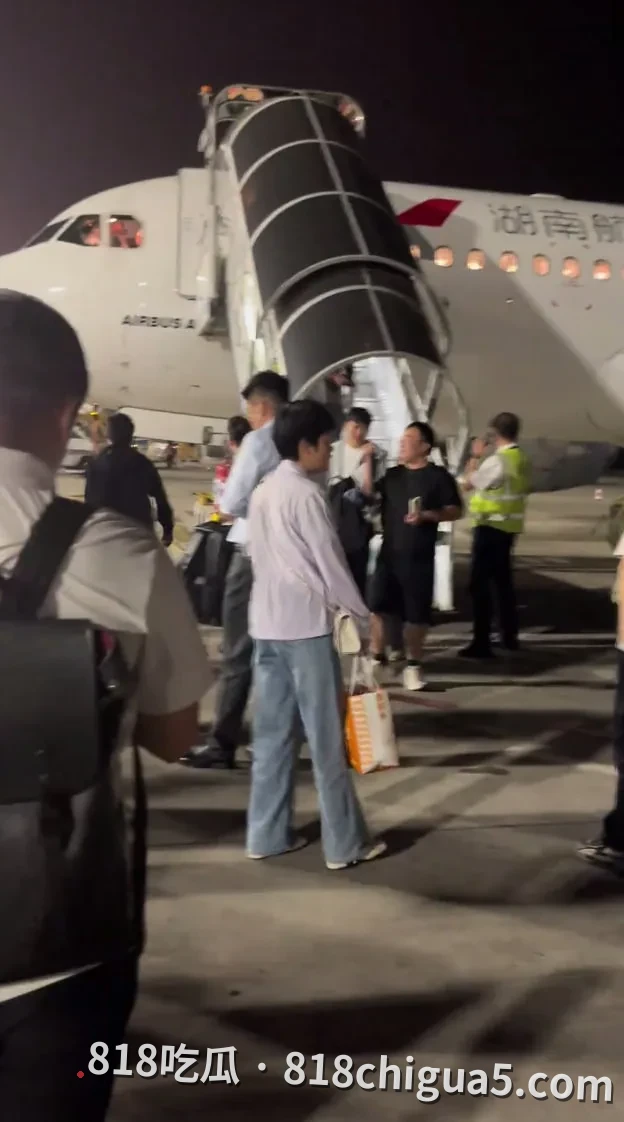
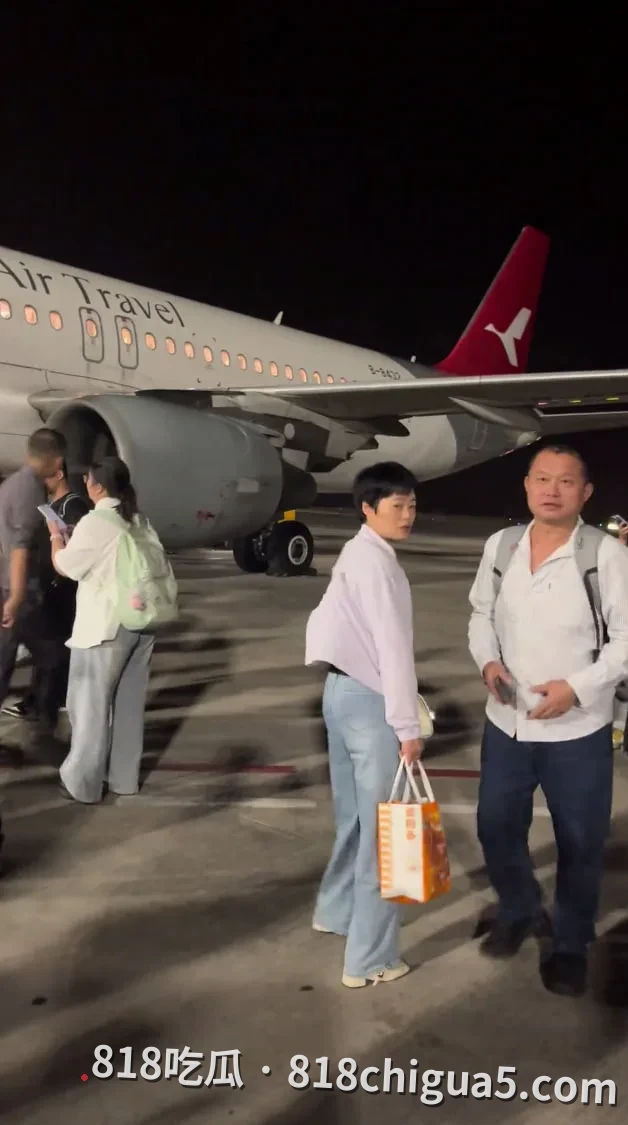
"Fire! Evacuate quickly!" On the evening of September 15, a dramatic scene unfolded on Hunan Airlines' flight A67776, which departed from Chengdu Tianfu Airport and was bound for Changsha Huanghua Airport. At 22:12, just as the plane had landed smoothly and the cabin door was about to open, thick smoke suddenly billowed out from the rear of the aircraft. Passengers were panicked and urged for evacuation, while cabin crew tried to calm everyone down. A video of the incident, captured by a passenger, quickly went viral and sparked widespread discussion online.
On September 17, Hunan Airlines issued an official statement to clarify the incident. The culprit behind this mid-air emergency was not a mechanical fault of the aircraft, but a common item that almost everyone carries during travel—a power bank (portable charger).
According to data from FlightAware and the airline, flight A67776, operated by an A320 aircraft, departed from Chengdu at 20:36 and landed normally in Changsha at 22:12.
However, as the plane had just come to a stop and the cabin door was about to open, passengers were preparing to disembark in an orderly manner when the air in the cabin suddenly became tense. A power bank carried by a passenger suddenly caught fire and produced flames inside the bag. Due to the special materials inside the power bank, the fire quickly produced dense smoke and spread rapidly throughout the cabin.
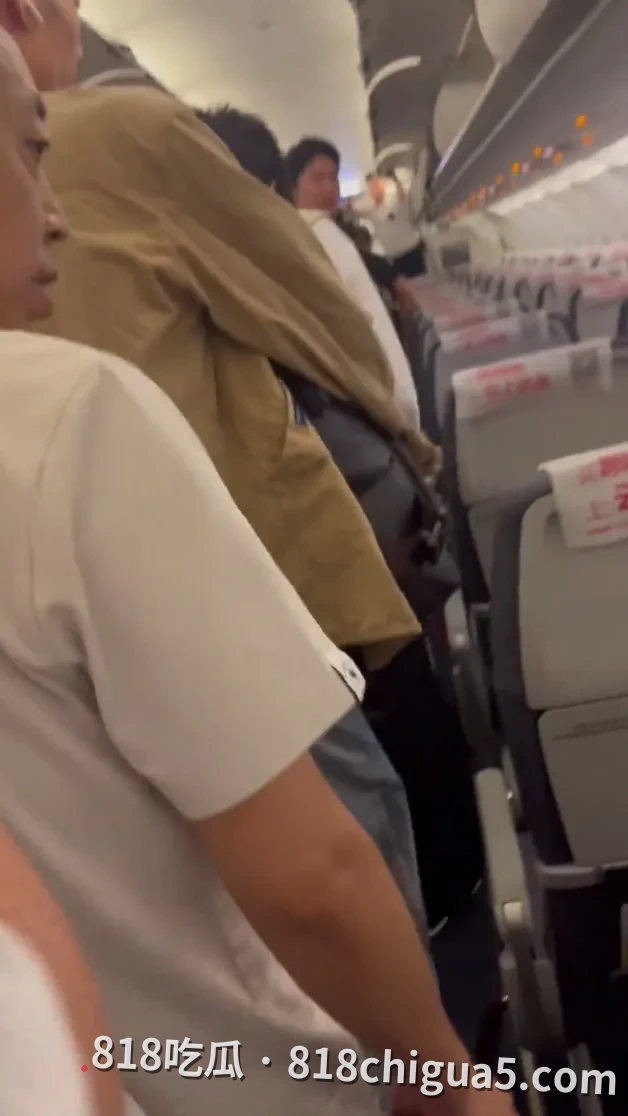
"At the time, everyone was waiting in line to disembark. Suddenly, smoke started coming out from the back, and someone shouted, 'Fire!' My heart skipped a beat, and everyone instinctively rushed forward, causing chaos," recalled a passenger who wished to remain anonymous.
Fortunately, the crew demonstrated exceptional professionalism in handling the emergency. Upon noticing the fire, the flight attendants immediately tried to calm the passengers to prevent a stampede, while organizing the evacuation of passengers in an orderly manner according to emergency procedures. At the same time, the crew efficiently implemented fire suppression measures and quickly extinguished the flames.
According to Hunan Airlines, due to timely handling, no one was injured and the cabin facilities were not damaged. The involved item was subsequently handed over to airport fire services for further processing. Although the incident did not affect subsequent flights, it served as a heavy safety warning for all air travelers.This is not the first time that a power bank has caused trouble on a commercial airliner. In recent years, incidents of power banks smoking, catching fire, or even exploding during air travel have become increasingly common. Why is this small digital accessory considered a major safety hazard in civil aviation? The core reason lies in the construction of the power bank—lithium-ion batteries.
Lithium is an extremely reactive metal with a high energy density. During the use and transportation of power banks, if they are subjected to compression, drops, violent vibrations, or high temperatures, or internal short circuits, lithium-ion batteries are extremely prone to thermal runaway. Once thermal runaway occurs, the internal temperature of the battery can soar to hundreds of degrees Celsius within seconds, releasing large amounts of flammable and explosive gases, leading to intense self-ignition or explosion. More dangerously, in the high-speed environment of flight, the cabin and cargo hold pressure changes with altitude. Although commercial airliners pressurize the cabin, the slight pressure difference and turbulence can act as a catalyst for disaster for power banks that already have quality defects (such as substandard battery cells or severe aging).
Frequent flyers are often reminded by security personnel: 'Power banks cannot be checked in, they must be carried on board!' Many people are puzzled: If power banks are so dangerous, why not put them in the cargo hold for checked baggage, instead of letting passengers bring them into the crowded cabin? This is actually the most scientific conclusion based on data and practical experience in civil aviation safety.
If power banks were to be checked in: The cargo hold is enclosed and unattended during the flight. If a power bank were to ignite due to luggage compression or pressure changes in the cargo hold, the high concentration of smoke and flames would be difficult to detect immediately. By the time the smoke alarm in the cargo hold sounds, the fire may have spread, seriously threatening the safety of the entire aircraft. If carried on board: The cabin is full of passengers and professional crew members. If a power bank starts smoking or catches fire, the surrounding people can instantly notice it. The crew is equipped with professional aviation fire extinguishers and explosion-proof equipment, and can quickly extinguish the fire during the 'golden few seconds' of the initial stage of the fire, as the crew of Hunan Airlines did in this incident, ensuring overall safety.
In response to this incident on flight A67776, Hunan Airlines issued a statement reminding passengers to prioritize not carrying power banks when traveling by air. If it is necessary to carry them, passengers must strictly follow the relevant regulations of the Civil Aviation Administration of China: No checked baggage: Power banks must be carried on board or placed in hand luggage. No unbranded products: The power banks carried must have clear markings and must meet relevant national safety standards, such as the '3C certification'. No 'three-no' products: Power banks without rated energy markings or manufacturer information are not allowed. Strict capacity restrictions: Power banks with a rated energy of no more than 100Wh (watt-hours) do not require approval from the airline (typically equivalent to 20,000 mAh or less); those with a rated energy between 100Wh and 160Wh must be approved by the airline; power banks with a rated energy exceeding 160Wh are strictly prohibited. Prohibition of use during the flight: Power banks must not be used to charge electronic devices during the flight. For power banks with an on/off switch, they should be kept off throughout the flight to prevent accidental discharge and heat generation inside the bag.
Civil aviation safety is no trivial matter; even the slightest oversight at 30,000 feet could turn into an irreparable disaster. The recent incident on flight A67776 of Hunan Airlines was successfully resolved thanks to the textbook-level professional handling by the crew. However, we cannot always rely on '侥幸' (侥幸 means侥幸 in English, which can be translated as '侥幸' or '侥幸' in this context, but it's more natural to say 'luck' or 'chance'). As practitioners of civilized travel, every passenger should strictly adhere to the Civil Aviation Administration's regulations on dangerous goods, and proactively check their carry-on items. Not bringing substandard power banks and not using them during the flight are not only a respect for civil aviation laws and regulations, but also the most basic responsibility for the safety of one's own and the lives of over a hundred passengers on board.

Comments
0No comments yet